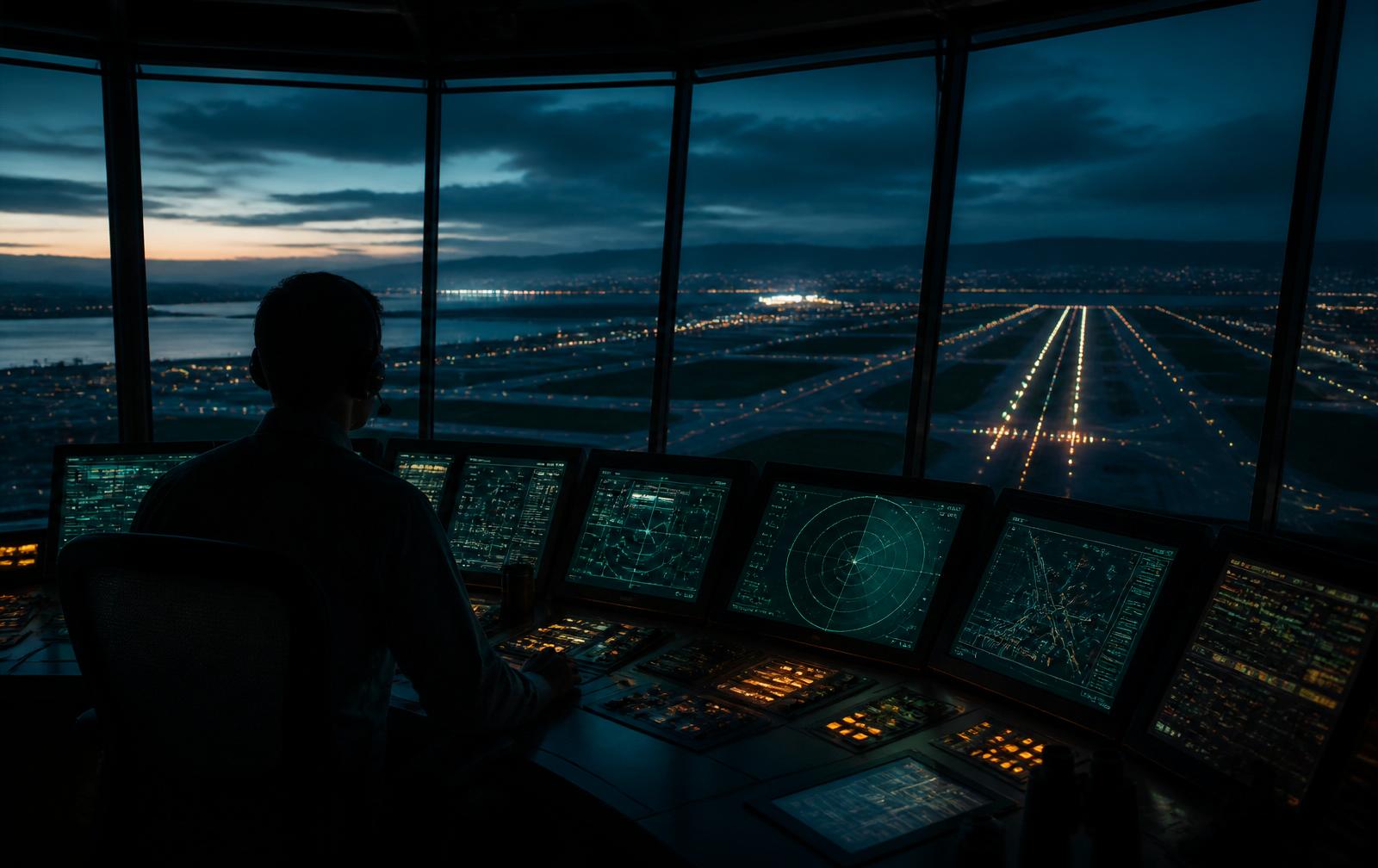
There is a persistent public misconception that modern airliners fly themselves, that the pilots up front are essentially babysitters who watch the autopilot make the actual decisions. It is one of those beliefs that is not exactly wrong — the autopilot really does fly the airplane for most of the cruise phase — but it is wrong in every way that matters. The image of the disengaged pilot mis-describes the job so completely that it makes it hard to understand what actually goes wrong when things go wrong, and why the industry pays these people what it does.
This article walks through a typical long-haul flight from the crew's perspective. Not the marketing version, and not the pilot-memoir version either, but a practical look at what fills the eight-plus hours between pushback and gate arrival. The truth is more interesting than the fantasy in both directions: less dramatic than the movies imply, and more demanding than the autopilot-babysitter framing suggests.
Preflight is when most of the work happens
Long before boarding begins, the crew is already deep in a two-hour preparation sequence that most passengers never see. It starts at the operations center or crew room, where the captain and first officer meet, review the day's flight plan package, and begin dissecting it. That package contains the filed route, alternate airports, fuel calculations, weather along the entire route, notices about airport and airspace conditions, aircraft weight and balance data, and any specific operational restrictions in effect that day.
The pilots do not accept the flight plan blindly. They compare the filed route against current weather, consider whether a different altitude or track would be smoother or more fuel-efficient, verify that the fuel load is appropriate for their alternates, and check that the aircraft's specific limitations match the plan. If they see something they do not like, they push back on dispatch and negotiate. This is genuine engineering work, done under time pressure, and the quality of it strongly influences how the flight goes.
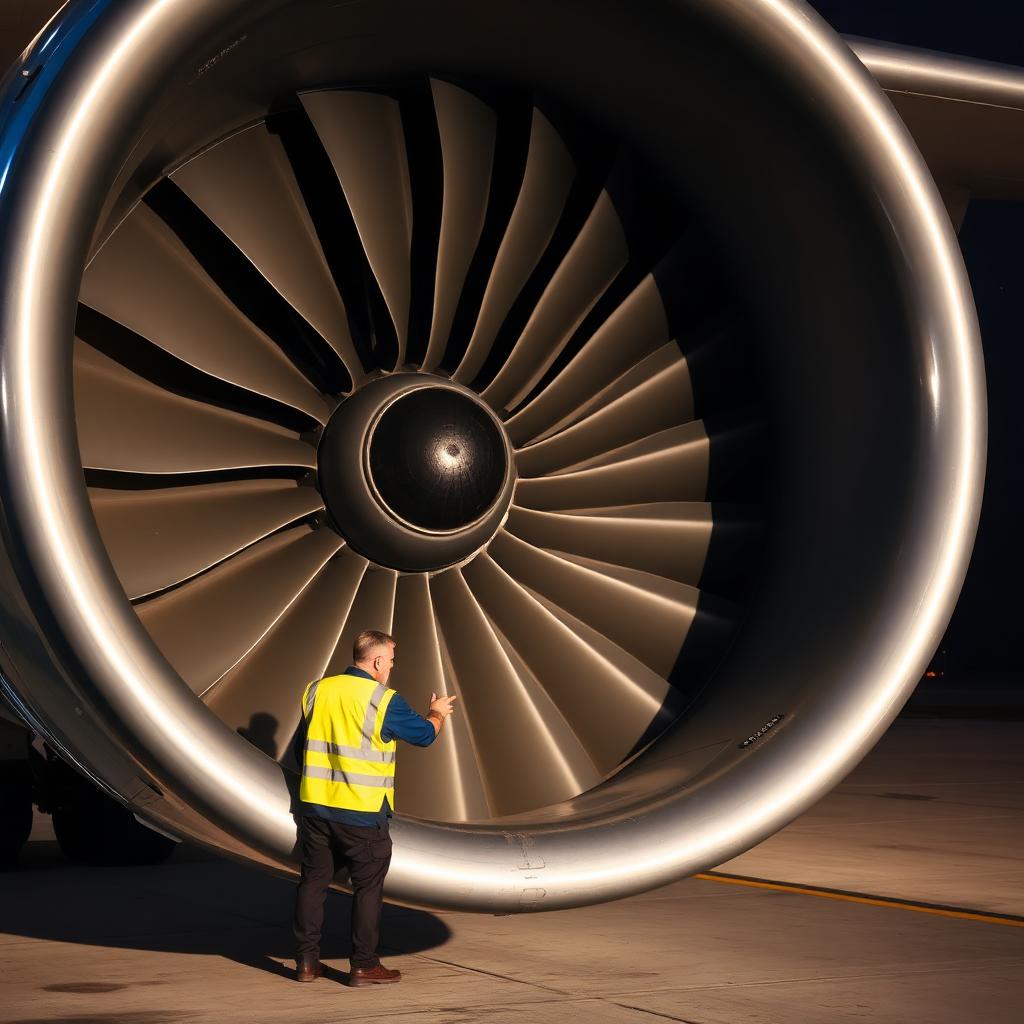
Once at the aircraft, the walkaround inspection is another checkpoint. One pilot circles the aircraft externally while the other configures the flight deck. External inspection catches problems that the aircraft's own systems cannot detect: leaks, panel damage, tire condition, the state of the pitot tubes and static ports, obvious birdstrike evidence. The internal setup programs the flight management system, verifies performance calculations, and confirms every switch and setting matches the departure profile. By the time boarding begins, the pilots have been working for well over an hour on nothing but preparation.
Takeoff is the most demanding phase, by far

Once the aircraft begins its takeoff roll, the pilots are in the highest-workload phase of the flight. Every takeoff is briefed in advance with specific failure procedures — what to do if an engine fails before a certain speed, what to do if it fails after that speed, what obstacles are relevant on the departure, what the immediate return procedure is. These briefings are not ceremonial. They are the framework for split-second decisions during a phase where there is no time to reason from first principles.
The takeoff itself is hand-flown. Autopilot engages only after the aircraft is clear of the ground and stable, sometimes not until well into the initial climb. The pilots are physically controlling the airplane through rotation, initial climb, gear retraction, flap retraction, engine power adjustments, and the first turns of the departure procedure — often while receiving rapid-fire instructions from air traffic control and monitoring for any anomaly on the engine or aircraft systems.
Departures out of complex airports like New York, Los Angeles, or London are choreographed sequences with tight altitude and speed constraints. Missing a constraint by even a small margin can trigger conflict-resolution instructions from ATC and disrupts the whole sequence behind you. The pilot flying is executing the maneuver while the pilot monitoring is reading back clearances, confirming compliance, and watching for anything the pilot flying might miss. This is genuine two-person work.
Cruise is not doing nothing
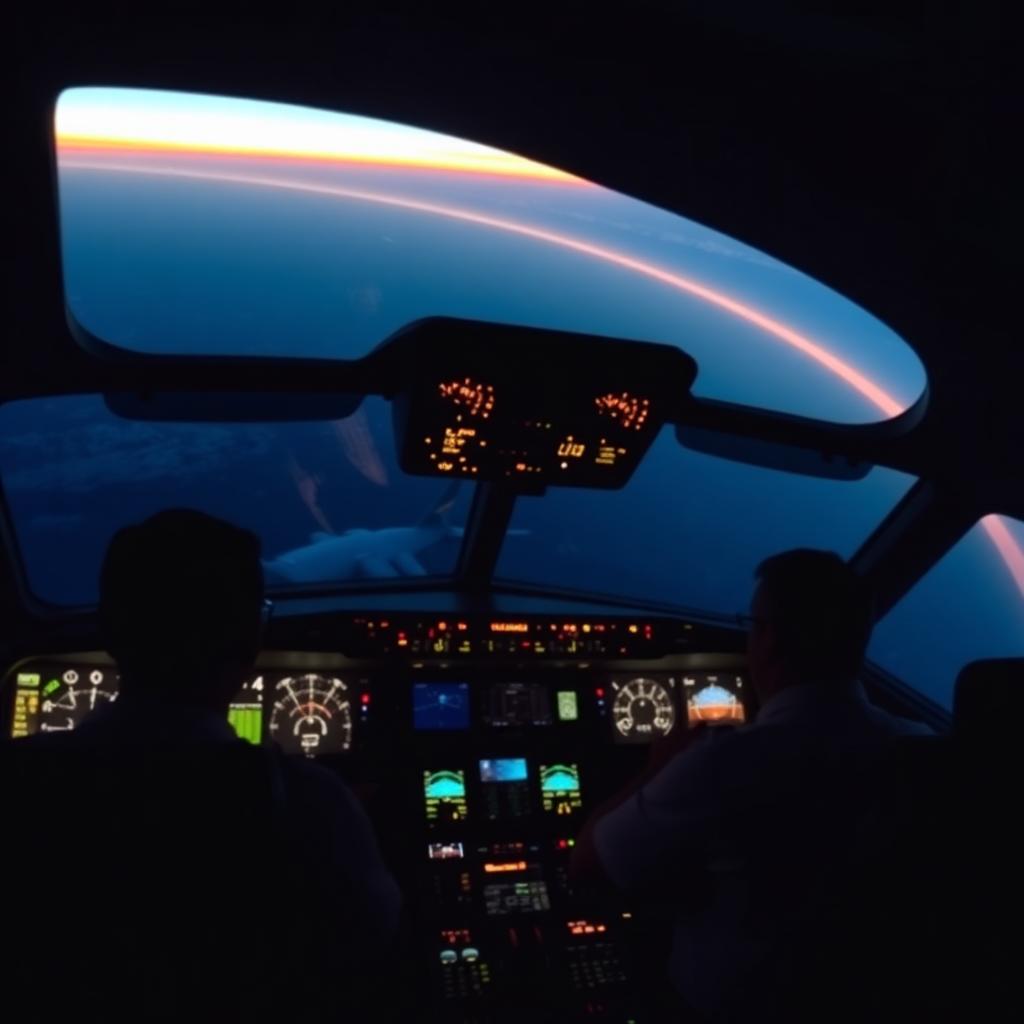
Once the aircraft levels off, the autopilot takes over most of the physical flying, and this is the phase that generates the babysitter image. In reality, the cruise is when the pilots do a different but essential kind of work: constant monitoring, planning, and problem prevention. The airplane is a complex machine flying through a complex environment, and both are changing continuously.
Weather ahead requires ongoing evaluation. A convective cell that was small on radar an hour ago may be a substantial deviation now. The forecast winds may not match the actual winds, changing fuel planning. Turbulence forecasts require altitude and route adjustments. Overflight of certain areas requires coordinating with a sequence of ATC facilities across regions. The pilots are effectively navigating a moving system, not sitting still.
System monitoring is the other continuous task. Modern aircraft have dozens of subsystems, each with its own health indicators. Engine parameters, hydraulic pressures, electrical loads, fuel balance, cabin pressurization, air conditioning — the pilots scan these regularly, watching for trends. Most problems announce themselves gradually, and the crew that spots a slow drift on an engine parameter three hours from destination has options that the crew that ignores it does not. This is where experience shows up: knowing what a slightly-off reading means before it becomes a formal caution.
The descent is a second high-workload phase

About an hour before landing, the workload climbs sharply again. The pilots begin descent planning, briefing the arrival procedure, reviewing the approach charts for the destination, calculating landing performance for the current conditions, and setting up the flight management system for the transition. All of this while the aircraft is still cruising and still requires the same monitoring as before.
By the time the aircraft is descending through the mid-teens, the crew is fully engaged. Speed constraints on the arrival, altitude crossings, coordination with a rapid sequence of controllers, potential weather deviations near the destination, and monitoring of runway conditions all layer on top of each other. The autopilot is still flying, but the pilots are actively feeding it inputs and correcting when the flight management system's prediction diverges from what ATC has cleared.
The approach itself is often hand-flown, particularly on visual approaches and in most low-visibility scenarios that are not full CAT-III autoland. Landing is universally hand-flown except in specific low-visibility procedures. The final hundred feet of descent is the moment of most concentrated skill in the whole flight — a moving target, in gusty winds, with a narrow band of acceptable outcomes.
What automation does and does not do
The autopilot is very good at flying a stable trajectory in normal conditions. It is much worse at deciding what trajectory to fly. Choosing an altitude, negotiating with ATC for a route change, deciding to divert around weather, evaluating whether to continue an approach or go around — these are all decisions the automation is not designed to make. The pilots make them.
Automation also degrades gracefully in some ways and abruptly in others. A gradual loss of a sensor might trigger a slow drift that the pilots need to catch. A sudden failure might disconnect the autopilot entirely and hand a partially-configured airplane back to the crew in seconds. Training for exactly these transitions — the moment when the automation gives up and the humans take over — is the core of modern pilot training. It is where accidents happen when they happen, and where the industry has invested most in the last two decades.
The best pilots are not the ones who fly the smoothest cruise. They are the ones who catch the developing problem thirty minutes before it becomes an emergency, and the ones who make the good decision in the eight seconds between the automation quitting and the ground getting close. That is what the paycheck is for, and it is not a job the autopilot is close to replacing.
Fatigue, monotony, and the human factor

One of the least glamorous but most operationally important topics in modern aviation is fatigue. Long-haul crews cross multiple time zones and work at hours when their biology wants to sleep. Regulations govern maximum duty periods and required rest, but within those limits, the actual challenge of staying alert during a 3 AM cruise segment is real, and airlines and unions negotiate heavily over exactly how it is managed.
In-flight rest facilities are standard on long-haul aircraft, and crews rotate through them on multi-pilot flights. Even so, the transition between rest and duty is not trivial. A pilot who has been asleep in a bunk for three hours and takes over the flight deck for the descent is at their most vulnerable point in the flight, and the operational procedures around this transition are specifically designed to buffer against it.
The other human factor is complacency. Long stretches without incident train the mind to expect the next hour to look like the last, and this is precisely when the unexpected event is most disruptive. The professional skill of an experienced crew includes maintaining vigilance through many uneventful hours, which is harder than it sounds and does not respond to willpower alone. The industry has developed structured cross-checks, standard call-outs, and monitoring routines specifically because human vigilance without those scaffolds is unreliable.
Why the job still exists
The obvious question, given how much of the routine work is automated, is why human pilots continue to be required at all. The industry answer is a combination of technical, regulatory, and empirical arguments. Technically, the automation cannot handle every combination of failures that current aircraft experience. Regulatory, no aviation authority in the world has certified single-pilot or zero-pilot operations for passenger aircraft, and the certification path is long. Empirically, the accident record of aviation, which is remarkable, was achieved by two-pilot crews and the industry is deeply reluctant to change the variable that has been working.
Advocates for reducing crew size point to increasingly capable automation and to specific accident types where automation might have performed better than the crew. Opponents point to the substantial set of accidents where the crew averted disaster and where automation had no framework for the required decision. The debate is real, but the near-term expectation is that two pilots remain the standard for commercial aviation for the foreseeable future.
In the meantime, the job is what it is: hours of concentrated attention punctuated by moments of demanding skill, with the whole thing running under a regulatory and cultural framework designed to catch the failures that inevitably occur. The next time you glance forward through the open cockpit door on boarding, that is what you are looking at.
A short history of how what pilots do became a problem worth solving

To understand where what pilots do sits today, it helps to remember how thoroughly the modern flying experience was invented in the space of a single generation. In the early 1980s, deregulation reshaped US aviation from a handful of route-protected carriers into a network of competing hubs, and almost every convention that today feels timeless — hub-and-spoke connections, revenue-managed fares, frequent-flyer programs, contract ground handlers, jet-bridge boarding at scale — dates from that period. The systems were built for a world with far fewer flights, no smartphones, and passengers who expected almost no real-time information. When volume tripled and the internet arrived, the underlying operational plumbing did not modernize at anything close to the same pace.
The result is a strange asymmetry that shapes every conversation about what pilots do. Airlines have world-class internal tooling: dispatch software that re-plans routes in seconds, crew-tracking systems that model every legal duty limit, revenue systems that reprice inventory a hundred times a day. Passengers have a boarding pass and a gate number. That gap is not because airlines are indifferent — it is because the interfaces travelers see were designed in an era when the airline's job ended at "publish a schedule and staff the counters." The behind-the-scenes complexity has exploded; the passenger-facing surface area has barely moved.
The last decade has started to close that gap, unevenly. Mobile apps replaced paper boarding passes. Push notifications replaced airport PA announcements. A handful of carriers began publishing inbound-aircraft tail numbers. But most of what a serious traveler needs to know about what pilots do is still buried inside operational systems the public was never meant to see. Independent products — SkyPulse among them — exist because the industry, left to itself, was not going to expose that information to the person actually sitting in seat 14C.
Understanding this history matters because it explains why the advice in this article works. It works because the underlying dynamics of what pilots do are not new, and they are not going to change soon. The airline network is a slow-moving system. The techniques that helped a road-warrior consultant in 2015 will help you today, adjusted for a few new variables. That stability is rare in consumer tech, and it is one of the reasons long-form travel writing still earns its place.
Edge cases and mistakes we see most often
Any subject worth writing three thousand words about has a long tail of edge cases that ordinary advice glosses over. With what pilots do, the most consequential mistakes are almost never the flashy ones. They are the small, repeated defaults that quietly accumulate cost — a fifteen-minute buffer trimmed once and then forever, a seat choice made without checking equipment, a rebooking accepted from an agent who was optimizing for their own queue rather than the traveler's day. These are not failures of knowledge; they are failures of attention at moments when attention is expensive.
The first edge case worth flagging is the "looks fine on paper" trap. Schedules, seat maps, layover diagrams and confirmation emails all describe intended reality. They do not describe what will actually happen when the wind switches at the origin airport, the inbound aircraft times out its crew, or the connection terminal turns out to require a bus transfer that no one told you about. The mismatch between paper reality and operational reality is where most what pilots do mistakes are born, and the fix is almost always the same: check the state of the physical world — aircraft position, airport configuration, weather — before you trust the plan on paper.
The second edge case is over-reliance on airline apps. Airline apps are excellent for the things airlines want you to do: check in, board, buy an upgrade. They are structurally poor at the things airlines are reluctant to surface — early delay indications, honest connection risk, cross-carrier alternatives, gate changes triggered by another airline's operation. If you notice yourself waiting for the airline app to tell you something is wrong, you are already late to the information. That is the single most common what pilots do mistake we see across our user base, and the one that generates the most avoidable stress.
The third edge case, and the one experienced travelers still get wrong, is treating rare events as impossible. A diversion, a mechanical swap, an equipment downgrade that eliminates your seat class — these happen to a small fraction of flights, but "small fraction of flights" applied across a year of travel is not small at all. Building a habit around what pilots do means having a plan for the ten percent scenario, not just the ninety. It costs almost nothing to know the alternate airport, the backup flight, the hotel policy of your credit card. It costs a great deal to learn those things at 11 PM in a terminal you did not plan to be in.
Finally, the mistake that we see across every category: rushing the decision that follows the disruption. When something goes wrong, the traveler with a two-minute head start on information almost always has a two-hour head start on outcomes, because they can think while everyone else is reacting. The point of paying attention to what pilots do is not to eliminate disruption — that is impossible — it is to buy that head start, consistently, on every trip.
What the data actually shows
We are careful with claims in this space because the aviation industry is drowning in confidently-stated numbers that turn out, on inspection, to be either out of date or measured badly. On the specific question of what pilots do, three findings hold up across every dataset we have looked at, and they are worth stating plainly.
First, variance is the story. Averages are almost useless in aviation, because the distribution of outcomes is heavily skewed. A "twelve minute average delay" for a given route hides the fact that most flights are on time and a small tail of flights are ninety-plus minutes late. Planning for the average is planning for a scenario that essentially never happens. Serious planning for what pilots do means thinking in percentiles — what does the ninetieth percentile day look like on this route, in this season, on this equipment? — and building buffers accordingly. Our internal dashboards are almost entirely percentile-based for exactly this reason.
Second, time-of-day dominates almost every other variable. The single strongest predictor of how a trip will go, once you strip out weather, is what time of day the flights operate. First banks of the morning are radically more reliable than last banks of the evening, and this is not a small effect — the on-time performance gap between a 6 AM departure and an 8 PM departure on the same route can approach twenty percentage points during summer. If a traveler asked us for one and only one behavior change to improve their year of flying, we would say "book earlier in the day" before anything else. It applies to what pilots do in almost every form.
Third, network effects compound. A delay at a hub does not stay at the hub; it propagates through the day's schedule with a decay function that is roughly log-linear. This is why an early morning weather event at a major connecting airport can still be causing missed connections at other airports at 9 PM. Travelers who understand what pilots do learn to read the day's network state, not just their own itinerary. It is the same skill an airline dispatcher exercises, applied at the scale of a single traveler with a single trip.
None of these findings are surprising to industry insiders, but they are rarely explained to travelers in plain language. Doing so is part of why long-form aviation writing exists at all. The numbers are not proprietary. The framing that makes them useful is.
A practical checklist for your next trip
The best test of any long article is whether it changes your behavior next week. Below is the compressed version of everything above, translated into a checklist you can actually run before and during your next flight. Read it once here, then let the app remind you of the pieces that matter for your specific trip.
The night before: confirm your seat and equipment; check the inbound aircraft's route for the day so you know what could go wrong upstream; scan the weather forecast for both origin and destination, and for the route between them; verify your credit-card lounge and delay-protection benefits, which almost no one remembers to check until they are already in the terminal.
Two hours before departure: check the current inbound-aircraft status. If the plane that will operate your flight is more than fifteen minutes late and the scheduled turn is under forty-five minutes, treat your departure time as a suggestion. Look at alternate flights on the same carrier and, if you are flexible, on other carriers. Know your options before you need them, not after.
At the airport: use the fast lane for security screening if you have it; walk to the gate before stopping for food, so you know where you are going; note the gate location relative to your connection, if you have one; find one plug and one seat you can defend, because the terminal will get more crowded, not less, as the day goes on.
During the flight: if you have a tight connection, check the inbound-aircraft status of your connecting flight before you take off, not after you land. On most modern aircraft with Wi-Fi, this is a thirty-second check. Knowing you have a tight window is far more actionable at 30,000 feet, when you have an hour to think, than after you land and have four minutes to sprint.
On arrival: if anything went wrong, go to two places at once. Get in the rebooking line in person while calling the airline's phone line on your device — whichever gets to a human first, take. Do not be pleasant at the expense of being clear about what you need. Agents have far more discretion than most travelers realize, but they use it for the passengers who ask specifically.
That checklist, run consistently, is what separates travelers who fly a lot from travelers who fly well. It is not exotic advice. It is boring, repeatable behavior, and it is exactly the kind of behavior our product exists to make effortless.
Frequently asked questions
"How much of this actually matters if I only fly two or three times a year?" More than you would think. The techniques in this article compound with volume, but they do not require it. The two-trip-a-year traveler is often the one who benefits most from an early delay warning, because they have less slack in their plans and less experience recovering when things go sideways. A single avoided missed connection can be the difference between a good trip and a memorable disaster.
"Do I need to pay for a premium tool to get most of the benefit?" No. The single most valuable habit — checking the inbound aircraft the night before and again two hours before departure — costs nothing and can be done with any of several free tools, including SkyPulse's free tier. Premium features exist for travelers who want richer notifications, longer trip histories, or team-level features, but the core information is not paywalled and never will be.
"What if my airline is doing something the article doesn't cover?" Airline policy differences matter less than most travelers assume. Almost every carrier's contract of carriage, IROPS handling, involuntary rebooking process and delay-classification scheme is close enough to industry norms that the general advice in this article applies. The exceptions are usually low-cost carriers with unusually strict change policies, and even those follow patterns that are easy to learn once and then apply forever.
"Is any of this going to change with new technology — AI, better data feeds, next-gen ATC?" Yes, and no. The underlying dynamics of what pilots do are stable. What changes is how early the information becomes available and how easy it is to act on. The last decade of change has been enormous, and the next decade will probably compress warning windows further. But a traveler who understands the fundamentals today will find future improvements easy to absorb. Someone who learns only the specific tool of the moment will be perpetually behind.
"What is the one thing you wish every traveler knew?" That the airline network is a physical system with observable state, not a black box. Every delay has a reason. Every reason leaves a signal somewhere. And every signal, if you know where to look, gives you a head start on the decision that follows. The point of this article, and of SkyPulse itself, is to hand you those signals in plain language, at the moment you need them.
Putting it into practice
The single hardest part of getting better at what pilots do is not the information — it is the willingness to change habits you have carried for years. Most travelers develop routines in their early twenties and simply repeat them, updating airline names but not underlying strategy. The result is a slow, invisible tax on every trip: a little more anxiety, a little more waiting, a few more missed connections than necessary.
We built SkyPulse specifically for the people who are tired of paying that tax. Every screen in the app is designed to compress the loop between "something changed" and "you knew about it and did something about it." That loop is the whole game. Airlines have their own version of it, running on multi-million dollar operations centers. Travelers historically had almost nothing — a gate agent's shrug, a departure board updated on airline time, a text message ninety minutes after the fact. That gap is what we close.
If you take one thing from this article, take this: the traveler who acts on information three minutes before everyone else in the terminal is a fundamentally different traveler than the one who reacts to a PA announcement. Not smarter. Not luckier. Just earlier. Being earlier is a habit, and habits are trainable. Start today, on your next trip, with one small change — check the inbound aircraft the night before. That is the entire beginning. Everything else compounds from there.
Safe travels, and see you at the gate — hopefully long before the boarding call.
Put SkyPulse to work on your next trip.
Live tracking, early delay warnings and airport intelligence — free to try.