
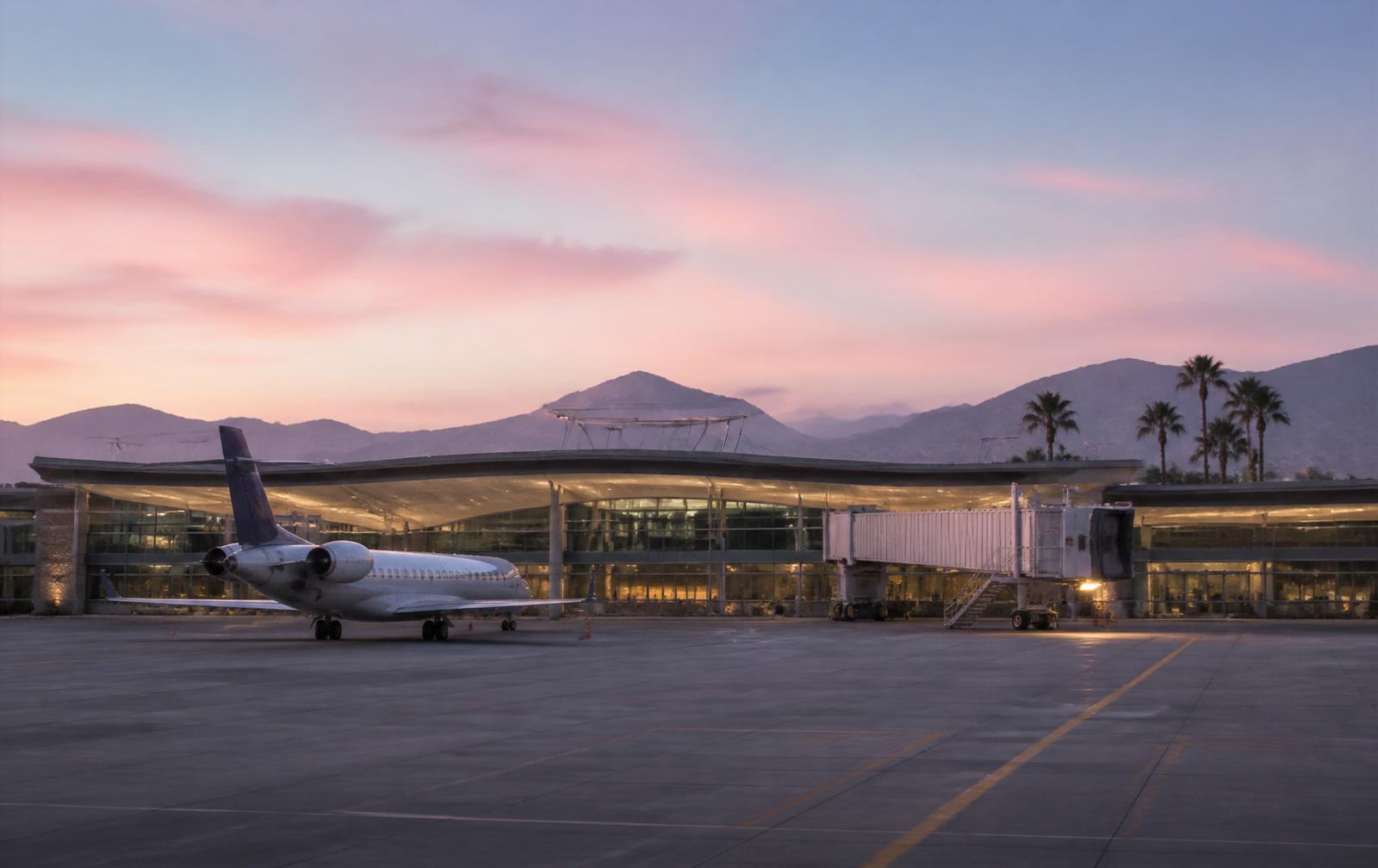
Big airports are big for a reason. They have the routes, the frequencies, the international connections, the premium lounges and — usually — the lowest fares because so many airlines compete under one roof. But big is not the same as good, and for a surprising number of routings, a nearby secondary or tertiary airport is not just more pleasant but structurally more reliable.
This is a tour of seven such airports. None of them are secrets, exactly, but each one is systematically underused by travelers who default to the megahub next door. We picked them by pairing operational data — on-time performance, average taxi times, security throughput, weather cancellation rates — with the softer stuff that actually determines whether a trip feels good: walk distances, food quality, parking sanity, and the ability to get out of the terminal and into a rental car or rideshare before the first person on your flight has even reached baggage claim.
If any of these airports are within a reasonable radius of your usual origin or destination, they deserve a second look the next time you book.
1. Providence (PVD) instead of Boston (BOS)
Boston Logan is one of the great American airports for its geography — a subway ride from downtown, an obvious international gateway, an airport that feels like the city it serves. But it is also weather-vulnerable, congested, and prone to the specific kind of delay cascade that hits every East Coast hub when the wind swings onshore in the afternoon. If you are flying to or from central or southern New England, Providence's T.F. Green airport is often a dramatically better experience.
The math is straightforward. PVD sits about an hour south of Boston, on a rail line that connects directly to the terminal. Security lines rarely exceed ten minutes even at peak. The airport handles a fraction of Logan's daily movements, which means it recovers from bad weather hours faster; when the entire Northeast is snarled by a nor'easter, PVD is often the first airport in the region to resume normal operations. Southwest, JetBlue, Frontier and Breeze all serve it with meaningful route networks. Fares to Florida, Nashville, Denver and much of the Southeast are frequently lower than the equivalent Logan fare, and the airport itself is small enough that you can walk from curb to gate in under fifteen minutes.
The tradeoff is international service, which at PVD is limited to a few seasonal routes. For any transatlantic trip you will still be using Logan. But for the domestic routes that make up most people's flying, PVD is quietly one of the best small airports in the country, and the fact that so few travelers use it as their default is a small gift to the ones who do.
2. Milwaukee (MKE) instead of Chicago O'Hare (ORD)

O'Hare is a marvel and a nightmare. It has some of the best route coverage in the world and some of the worst delay statistics of any major American hub. Winter weather compounds the problem, and even in summer the sheer density of operations means that a single ground stop cascades for hours.
Milwaukee's Mitchell airport, ninety minutes north on the interstate or a comfortable rail connection through downtown Chicago, is the other side of the coin. Its terminal is compact, its security is genuinely quick, its parking is reasonable and its winter operations are famously smooth because it has invested heavily in de-icing infrastructure for its size. Frontier and Southwest maintain solid networks there, and Delta has kept useful East Coast frequencies.
For travelers based in the northern suburbs of Chicago, Kenosha, Racine, or anywhere in southeastern Wisconsin, MKE is not even a compromise — it is simply the better airport. The catch is timing. If your flight is in the middle of a weekday afternoon and you live near the Loop, O'Hare's rail connection is faster. But for early-morning or late-evening departures, when Chicago traffic is fickle and O'Hare's security lines are legendary, MKE consistently wins.
3. Long Beach (LGB) instead of LAX
Los Angeles International is a case study in how a great airport can be ruined by its ground access. The terminals themselves have improved dramatically in recent years, with the new Tom Bradley international building and a serious effort at internal circulation. But the drive to and from LAX remains among the worst airport commutes in the country, and the surface streets around the airport can turn a three-mile approach into a fifty-minute crawl.
Long Beach airport, twenty miles south, is a completely different experience. Its terminal is tiny, historic, and shaded with palm trees. Security is often single-digit minutes. The gates are so close to the curb that you can drop off a passenger, watch them clear security, and still catch a wave at them from the parking lot. Southwest, JetBlue and Delta maintain useful domestic networks, especially to the Bay Area, Portland, Seattle, Denver and Las Vegas.
For travelers headed to Orange County, Long Beach itself, the South Bay or the eastern reaches of Los Angeles County, LGB is faster, cheaper on parking, and vastly more humane than LAX. The one thing you give up is transcontinental frequency and international connections. But if you are flying domestic and your ground origin is anywhere south of downtown LA, the airport nobody talks about is often the airport you should use.
4. Providenciales (PLS) or St. Kitts (SKB) instead of Miami (MIA) as a Caribbean gateway

This is a strange one to include, because we are not suggesting you avoid Miami entirely. Miami remains the dominant Latin American gateway in the United States, and if your destination is anywhere in South America, MIA is nearly unavoidable. But for Caribbean vacations, particularly to the eastern Caribbean, using Miami as a connection point is often a mistake.
Miami's Caribbean feeder flights are frequently the last banks of the day, operated by regional aircraft, subject to afternoon thunderstorm delays, and prone to overnight scheduling disasters when weather closes the airport for even a short window. Providenciales in Turks and Caicos, or Basseterre in St. Kitts, both offer direct service from a handful of US East Coast airports — Charlotte, JFK, Newark, sometimes Boston — that lets you skip Miami entirely.
The gate structure at PLS and SKB is small, the immigration lines are short, and the transfer to your resort is measured in minutes, not hours. For a beach vacation, spending an extra two hundred dollars on a nonstop routing that bypasses Miami's mid-summer chaos is often the best money you will spend on the whole trip. This is airport strategy at its most concrete: the airport that gets you to your actual destination is worth more than the airport with more airlines competing for your business.
5. Oakland (OAK) instead of San Francisco (SFO)
SFO is beautiful, well-run, and doomed by its fog. Its two parallel runway systems are so close together that when the marine layer rolls in, controllers have to sequence arrivals single-file instead of in parallel, cutting arrival rates in half. When this happens, and it happens routinely between May and October, the entire West Coast schedule bends around it. Cancellations and diversions follow.
Oakland, twelve miles across the bay, does not have the fog problem. Its runways are configured differently, and its inbound traffic geometry is more forgiving. Southwest runs a serious hub there, and Alaska has been steadily expanding. For travelers in the East Bay, Oakland is obviously closer. For travelers in San Francisco itself, BART reaches OAK directly and the ride is not meaningfully longer than to SFO during peak hours.
The Oakland move is particularly valuable for early morning departures in summer, when SFO's arrival delays cascade into departure delays for the same aircraft. If you are flying out at 6 AM on a July Tuesday, Oakland's on-time performance is markedly better than SFO's for structural reasons that no schedule change can fix. Book accordingly.
6. Baltimore (BWI) instead of Washington Dulles (IAD) or Reagan (DCA)

The Washington region has three airports, each with a different personality. Reagan National is beautiful but constrained by its perimeter rules and its exposure to the same weather that closes the entire mid-Atlantic. Dulles is a solid international gateway but sprawling, and the drive from central DC can be brutal. Baltimore-Washington International is often the quiet best choice for domestic travel.
BWI is Southwest's largest East Coast operation, with dozens of daily departures to points across the country. Its terminal is straightforward, its security is efficient, and its rail connection into downtown Baltimore and onward to DC via Amtrak or MARC is genuinely useful. Parking is cheaper than at either Reagan or Dulles.
For travelers between the two cities, BWI is the airport that makes the most sense for domestic flights to the Midwest, Florida, and the West Coast, especially on Southwest. The one thing to know: BWI's security lines can spike during Southwest's early-morning banks, so build in a bit of extra time before a 6 AM departure. Otherwise, this is the calm alternative to two much more famous airports.
7. Colorado Springs (COS) instead of Denver (DEN)
Denver International is a massive, well-run airport that has one flaw: it is nowhere near anything. The drive from central Denver, or worse, from the mountain towns, is long and prone to weather closures. In winter, a serious storm can shut down I-70 for a full day, stranding travelers who thought they were being clever by driving early.
Colorado Springs airport, an hour south of Denver, is a completely different experience. Its terminal is small, its security is fast, and its exposure to Front Range winter weather is measurably lower than Denver's. Southwest, Frontier, American and United all serve it with useful frequencies to the major western hubs and a growing Texas network.
For travelers based in Colorado Springs, obviously, but also for travelers in Pueblo, Manitou Springs, and much of the southern Front Range, COS is the natural airport. And for skiers headed to the southern resorts — Crested Butte, Telluride, Monarch — flying into COS avoids the worst of the I-70 chaos that ruins so many Denver-based ski trips.
How to think about airport substitution

The general principle is simple. Big airports have more routes, more frequencies and lower base fares, but they have higher variance. When they work, they are magnificent. When they fail — because of weather, congestion, an equipment issue at a critical time — they fail spectacularly, and every one of their customers pays the price simultaneously. Small airports have fewer options but lower variance. They rarely surprise you, in either direction.
For time-sensitive trips — a wedding, a job interview, a cruise departure — the small airport is almost always the better bet even at a higher fare, because the variance protection is worth real money. For flexible trips where you can absorb a bad day, the big airport is fine, and the cost savings can be meaningful.
The mistake most travelers make is defaulting to the big airport for every trip, regardless of the trip's flexibility. Match the airport to the trip, and your average travel day improves dramatically.
Getting the data yourself
You do not need SkyPulse to do this analysis. All of the underlying data — on-time percentages, cancellation rates, average taxi times, weather cancellation frequencies — is public. The DOT publishes it monthly, and academic researchers have built freely available datasets going back decades. If you want to spend an afternoon looking up your own airport pairs, you can.
What SkyPulse does is compress that analysis into the moment of booking. When you search a route, we show you not just the fare but the reliability history of every airport on both ends. If a nearby alternative airport has meaningfully better reliability for the same fare, we flag it. Most travelers pick the better airport once they see the numbers side by side. The information asymmetry, once removed, tends to remove itself.
A short history of how airport selection became a problem worth solving
To understand where airport selection sits today, it helps to remember how thoroughly the modern flying experience was invented in the space of a single generation. In the early 1980s, deregulation reshaped US aviation from a handful of route-protected carriers into a network of competing hubs, and almost every convention that today feels timeless — hub-and-spoke connections, revenue-managed fares, frequent-flyer programs, contract ground handlers, jet-bridge boarding at scale — dates from that period. The systems were built for a world with far fewer flights, no smartphones, and passengers who expected almost no real-time information. When volume tripled and the internet arrived, the underlying operational plumbing did not modernize at anything close to the same pace.
The result is a strange asymmetry that shapes every conversation about airport selection. Airlines have world-class internal tooling: dispatch software that re-plans routes in seconds, crew-tracking systems that model every legal duty limit, revenue systems that reprice inventory a hundred times a day. Passengers have a boarding pass and a gate number. That gap is not because airlines are indifferent — it is because the interfaces travelers see were designed in an era when the airline's job ended at "publish a schedule and staff the counters." The behind-the-scenes complexity has exploded; the passenger-facing surface area has barely moved.
The last decade has started to close that gap, unevenly. Mobile apps replaced paper boarding passes. Push notifications replaced airport PA announcements. A handful of carriers began publishing inbound-aircraft tail numbers. But most of what a serious traveler needs to know about airport selection is still buried inside operational systems the public was never meant to see. Independent products — SkyPulse among them — exist because the industry, left to itself, was not going to expose that information to the person actually sitting in seat 14C.
Understanding this history matters because it explains why the advice in this article works. It works because the underlying dynamics of airport selection are not new, and they are not going to change soon. The airline network is a slow-moving system. The techniques that helped a road-warrior consultant in 2015 will help you today, adjusted for a few new variables. That stability is rare in consumer tech, and it is one of the reasons long-form travel writing still earns its place.
Edge cases and mistakes we see most often
Any subject worth writing three thousand words about has a long tail of edge cases that ordinary advice glosses over. With airport selection, the most consequential mistakes are almost never the flashy ones. They are the small, repeated defaults that quietly accumulate cost — a fifteen-minute buffer trimmed once and then forever, a seat choice made without checking equipment, a rebooking accepted from an agent who was optimizing for their own queue rather than the traveler's day. These are not failures of knowledge; they are failures of attention at moments when attention is expensive.
The first edge case worth flagging is the "looks fine on paper" trap. Schedules, seat maps, layover diagrams and confirmation emails all describe intended reality. They do not describe what will actually happen when the wind switches at the origin airport, the inbound aircraft times out its crew, or the connection terminal turns out to require a bus transfer that no one told you about. The mismatch between paper reality and operational reality is where most airport selection mistakes are born, and the fix is almost always the same: check the state of the physical world — aircraft position, airport configuration, weather — before you trust the plan on paper.
The second edge case is over-reliance on airline apps. Airline apps are excellent for the things airlines want you to do: check in, board, buy an upgrade. They are structurally poor at the things airlines are reluctant to surface — early delay indications, honest connection risk, cross-carrier alternatives, gate changes triggered by another airline's operation. If you notice yourself waiting for the airline app to tell you something is wrong, you are already late to the information. That is the single most common airport selection mistake we see across our user base, and the one that generates the most avoidable stress.
The third edge case, and the one experienced travelers still get wrong, is treating rare events as impossible. A diversion, a mechanical swap, an equipment downgrade that eliminates your seat class — these happen to a small fraction of flights, but "small fraction of flights" applied across a year of travel is not small at all. Building a habit around airport selection means having a plan for the ten percent scenario, not just the ninety. It costs almost nothing to know the alternate airport, the backup flight, the hotel policy of your credit card. It costs a great deal to learn those things at 11 PM in a terminal you did not plan to be in.
Finally, the mistake that we see across every category: rushing the decision that follows the disruption. When something goes wrong, the traveler with a two-minute head start on information almost always has a two-hour head start on outcomes, because they can think while everyone else is reacting. The point of paying attention to airport selection is not to eliminate disruption — that is impossible — it is to buy that head start, consistently, on every trip.
What the data actually shows
We are careful with claims in this space because the aviation industry is drowning in confidently-stated numbers that turn out, on inspection, to be either out of date or measured badly. On the specific question of airport selection, three findings hold up across every dataset we have looked at, and they are worth stating plainly.
First, variance is the story. Averages are almost useless in aviation, because the distribution of outcomes is heavily skewed. A "twelve minute average delay" for a given route hides the fact that most flights are on time and a small tail of flights are ninety-plus minutes late. Planning for the average is planning for a scenario that essentially never happens. Serious planning for airport selection means thinking in percentiles — what does the ninetieth percentile day look like on this route, in this season, on this equipment? — and building buffers accordingly. Our internal dashboards are almost entirely percentile-based for exactly this reason.
Second, time-of-day dominates almost every other variable. The single strongest predictor of how a trip will go, once you strip out weather, is what time of day the flights operate. First banks of the morning are radically more reliable than last banks of the evening, and this is not a small effect — the on-time performance gap between a 6 AM departure and an 8 PM departure on the same route can approach twenty percentage points during summer. If a traveler asked us for one and only one behavior change to improve their year of flying, we would say "book earlier in the day" before anything else. It applies to airport selection in almost every form.
Third, network effects compound. A delay at a hub does not stay at the hub; it propagates through the day's schedule with a decay function that is roughly log-linear. This is why an early morning weather event at a major connecting airport can still be causing missed connections at other airports at 9 PM. Travelers who understand airport selection learn to read the day's network state, not just their own itinerary. It is the same skill an airline dispatcher exercises, applied at the scale of a single traveler with a single trip.
None of these findings are surprising to industry insiders, but they are rarely explained to travelers in plain language. Doing so is part of why long-form aviation writing exists at all. The numbers are not proprietary. The framing that makes them useful is.
A practical checklist for your next trip
The best test of any long article is whether it changes your behavior next week. Below is the compressed version of everything above, translated into a checklist you can actually run before and during your next flight. Read it once here, then let the app remind you of the pieces that matter for your specific trip.
The night before: confirm your seat and equipment; check the inbound aircraft's route for the day so you know what could go wrong upstream; scan the weather forecast for both origin and destination, and for the route between them; verify your credit-card lounge and delay-protection benefits, which almost no one remembers to check until they are already in the terminal.
Two hours before departure: check the current inbound-aircraft status. If the plane that will operate your flight is more than fifteen minutes late and the scheduled turn is under forty-five minutes, treat your departure time as a suggestion. Look at alternate flights on the same carrier and, if you are flexible, on other carriers. Know your options before you need them, not after.
At the airport: use the fast lane for security screening if you have it; walk to the gate before stopping for food, so you know where you are going; note the gate location relative to your connection, if you have one; find one plug and one seat you can defend, because the terminal will get more crowded, not less, as the day goes on.
During the flight: if you have a tight connection, check the inbound-aircraft status of your connecting flight before you take off, not after you land. On most modern aircraft with Wi-Fi, this is a thirty-second check. Knowing you have a tight window is far more actionable at 30,000 feet, when you have an hour to think, than after you land and have four minutes to sprint.
On arrival: if anything went wrong, go to two places at once. Get in the rebooking line in person while calling the airline's phone line on your device — whichever gets to a human first, take. Do not be pleasant at the expense of being clear about what you need. Agents have far more discretion than most travelers realize, but they use it for the passengers who ask specifically.
That checklist, run consistently, is what separates travelers who fly a lot from travelers who fly well. It is not exotic advice. It is boring, repeatable behavior, and it is exactly the kind of behavior our product exists to make effortless.
Frequently asked questions
"How much of this actually matters if I only fly two or three times a year?" More than you would think. The techniques in this article compound with volume, but they do not require it. The two-trip-a-year traveler is often the one who benefits most from an early delay warning, because they have less slack in their plans and less experience recovering when things go sideways. A single avoided missed connection can be the difference between a good trip and a memorable disaster.
"Do I need to pay for a premium tool to get most of the benefit?" No. The single most valuable habit — checking the inbound aircraft the night before and again two hours before departure — costs nothing and can be done with any of several free tools, including SkyPulse's free tier. Premium features exist for travelers who want richer notifications, longer trip histories, or team-level features, but the core information is not paywalled and never will be.
"What if my airline is doing something the article doesn't cover?" Airline policy differences matter less than most travelers assume. Almost every carrier's contract of carriage, IROPS handling, involuntary rebooking process and delay-classification scheme is close enough to industry norms that the general advice in this article applies. The exceptions are usually low-cost carriers with unusually strict change policies, and even those follow patterns that are easy to learn once and then apply forever.
"Is any of this going to change with new technology — AI, better data feeds, next-gen ATC?" Yes, and no. The underlying dynamics of airport selection are stable. What changes is how early the information becomes available and how easy it is to act on. The last decade of change has been enormous, and the next decade will probably compress warning windows further. But a traveler who understands the fundamentals today will find future improvements easy to absorb. Someone who learns only the specific tool of the moment will be perpetually behind.
"What is the one thing you wish every traveler knew?" That the airline network is a physical system with observable state, not a black box. Every delay has a reason. Every reason leaves a signal somewhere. And every signal, if you know where to look, gives you a head start on the decision that follows. The point of this article, and of SkyPulse itself, is to hand you those signals in plain language, at the moment you need them.
Putting it into practice
The single hardest part of getting better at airport selection is not the information — it is the willingness to change habits you have carried for years. Most travelers develop routines in their early twenties and simply repeat them, updating airline names but not underlying strategy. The result is a slow, invisible tax on every trip: a little more anxiety, a little more waiting, a few more missed connections than necessary.
We built SkyPulse specifically for the people who are tired of paying that tax. Every screen in the app is designed to compress the loop between "something changed" and "you knew about it and did something about it." That loop is the whole game. Airlines have their own version of it, running on multi-million dollar operations centers. Travelers historically had almost nothing — a gate agent's shrug, a departure board updated on airline time, a text message ninety minutes after the fact. That gap is what we close.
If you take one thing from this article, take this: the traveler who acts on information three minutes before everyone else in the terminal is a fundamentally different traveler than the one who reacts to a PA announcement. Not smarter. Not luckier. Just earlier. Being earlier is a habit, and habits are trainable. Start today, on your next trip, with one small change — check the inbound aircraft the night before. That is the entire beginning. Everything else compounds from there.
Safe travels, and see you at the gate — hopefully long before the boarding call.
Put SkyPulse to work on your next trip.
Live tracking, early delay warnings and airport intelligence — free to try.